

Band Saws vs Router Tables: Which Should You Buy in 2026
If you are building furniture, cabinetry, or one-off pieces, the choice between a band saw and a router table is not really a choice between two interchangeable machines. A band saw is a cutting machine built around a continuous blade. A router table is a precision surfacing and profiling platform built around a router bit. The question you should ask is not “Which one is better?” but “Which cutting problem do I need to solve more often, and which one will hold accuracy while I work?”
Beginners often buy the first machine that feels like a shortcut. Seasoned woodworkers usually buy the machine that removes the most waste in the fewest passes while leaving enough material for joinery, finishing, and corrections. That is the standard I use in this comparison: flatness, fence accuracy, vibration, blade or bit behavior, and whether the tool earns its place in a real shop where parts have to fit together, not just look neat on the bench.
Affiliate disclosure: if you buy through these links, we may earn a commission at no extra cost to you.
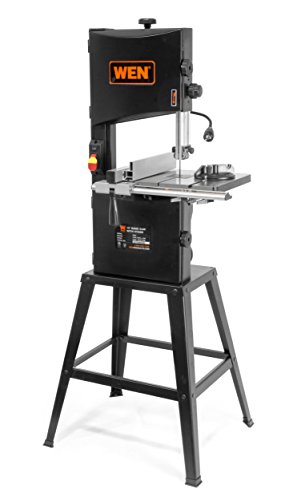

Table of Contents
- Models in this comparison
- Quick Verdict
- About Band Saws
- About Router Tables
- Head-to-Head: Cut Type and Material Removal
- Head-to-Head: Precision and Repeatability
- Head-to-Head: Vibration, Surface Finish, and Shop Durability
- Who Should Choose Band Saws?
- Who Should Choose Router Tables?
- Our Verdict
- Frequently Asked Questions
- Sources & References
Models in this comparison
Affiliate disclosure: if you buy through these links, we may earn a commission at no extra cost to you.
Quick Verdict
Choose Band Saws if...
- You need to resaw lumber into thinner slabs or rough out thicker timber.
- Your work involves medium or large-radius curves, irregular shapes, or initial contour cuts.
- You want a machine that can remove large amounts of material before final shaping.
Choose Router Tables if...
- You need repeatable edge profiles, grooves, dados, or matching panels.
- You want controlled, repeatable cuts with less freehand variation.
- Your work includes finished edges, case work, doors, or repeated joinery features.
One scope note before cost: a band saw is normally a complete machine, while a router table may be sold as a table and fence system, and may require a separate router. That difference matters. A fair cost comparison would need to compare a complete band saw against a complete router-table system, but this article does not make a source-bound cost claim.
| Factor | Band Saws | Router Tables |
|---|---|---|
| Relative Cost (source-bound only) | No source-bound cost claim is available here. | No source-bound cost claim is available here. Scope can differ because a router table may require a router. |
| Best For | Resawing, rough contouring, curved cuts, and irregular shapes in thicker timber. | Repeatable edge profiles, grooves, dados, and controlled routing on panels. |
| Setup Difficulty | Requires attention to blade tension, tracking, wheel alignment, and guard clearance. | Requires attention to table flatness, fence accuracy, bit height, and bit selection. |
| Reliability | Depends on blade condition, wheel tracking, tension, and vibration control. | Depends on table stability, fence accuracy, motor capacity, and bit quality. |
| Key Advantage | Can cut curves and resaw material that would be awkward or impossible on many other machines. | Turns freehand routing into a repeatable, controlled operation with a guided fence. |
| Main Drawback | Blade wear, tracking issues, and vibration can affect cut quality if the machine is not well maintained. | Small tables can restrict wide panels, and bit choice or fence inaccuracy can create visible errors. |
About Band Saws
A band saw uses a continuous flexible blade loop stretched between two wheels. In a shop, that design gives it a very specific job: it cuts curves, resaws lumber into thinner slabs, and roughs out irregular shapes in wood that may be several inches thick. For furniture makers, that matters because a lot of good work begins with removing waste quickly, not with making the final finished surface. A band saw can take a slab, a curved blank, or an offcut and bring it close to final shape before the plane, jointer, router, or hand tool takes over.
The craft issue with a band saw is control. Blade quality, tension, tracking, and wheel alignment all affect how clean the cut is. A well-set band saw can make a straight resaw cut with a consistent kerf and a reasonably smooth face. A poorly set one will wander, burn, vibrate, or leave a surface that needs heavy cleanup. For beginners, the band saw is forgiving in the sense that it does not demand the same bit knowledge as a router table, but it is not forgiving of poor maintenance. For experienced woodworkers, the band saw becomes a material-shaping tool: it is where slabs get thinned, curved blanks get roughed, and offcuts get turned into usable stock.
When I evaluate a band saw, I look at three things: blade behavior, wheel alignment, and vibration. The blade should track cleanly without rubbing the wheel flange. The machine should feel solid under load, especially when resawing dense hardwood. The cut should be steady, not shimmery. If the blade is dull, the tension is off, or the wheels are not aligned, the cut will tell you. That is why a band saw is not just a “curve cutter.” It is a material-removal machine that can save time, but only if it is kept in good working order.
About Router Tables
A router table mounts a router upside down under a flat table, allowing the workpiece to be fed across the exposed bit. That changes the nature of the operation. Instead of freehand routing, where the tool moves and the wood is hard to control, the router stays fixed and the wood moves. That is a big difference. It makes repeatable edge profiles, grooves, dados, and matching panels much easier to produce. In cabinetry and furniture, that repeatability is often the difference between parts that fit together and parts that need trimming, shimming, or rebuilding.
The router table is where precision becomes visible. Table flatness matters because a warped table can twist the workpiece or let it lift. Fence accuracy matters because a fence that is not square or stable will create inconsistent cut depths and locations. Bit quality matters because a cheap or poorly sharpened bit can tear out, chatter, or burn. Vibration matters because it shows up in the surface finish, especially in figured wood or thin veneered panels. A router table can make a beautiful edge, but it can also make a very visible mistake if the setup is sloppy.
According to toolsradar, a router table should be at least 24x32 inches for maneuverability, with smaller tables cramping wide panels. That is a practical limit many beginners underestimate. A small table may be fine for trim or narrow boards, but it becomes frustrating when you are working on doors, cabinet sides, or wide panels. According to toolsradar, a T-slot aluminum router table fence with micro-adjust in 1/64-inch increments is recommended for precision. That kind of fence is not a luxury; it is the difference between “close enough” and “repeatable.” According to toolsradar, a 2-3 HP motor is cited as handling hardwood on a router table, which is another reason to match the machine to the material rather than assuming any router will do the job.
Head-to-Head: Cut Type and Material Removal
The band saw wins when the job is to remove material in a shape that is not straight and flat. If you are resawing a thick board into thinner slabs, roughing out a curved leg, or cutting an irregular blank, the band saw is the more direct tool. It can handle thicker work and curved paths in a way a router table simply cannot. A router table is not designed to resaw lumber. It is designed to profile edges, cut grooves, and make repeatable cuts with a bit.
The router table wins when the job is to make a precise, repeatable cut on a flat or near-flat surface. If you are rounding over the edge of a door, cutting a dado for a shelf, or profiling a set of matching panels, the router table gives you control that freehand routing often lacks. According to toolsradar, a router table is especially useful when repeatability matters, such as for edge profiles, grooves, and dados, because it can reduce the wavy cuts and tear-out associated with freehand routing. In other words, the band saw is for shaping material; the router table is for defining finished features.
Head-to-Head: Precision and Repeatability
Precision means something different on these two machines. On a band saw, precision is about tracking, tension, and wheel alignment. A good band saw can make a straight cut with a consistent kerf, but it is not a tool for making a set of identical edge profiles. Its accuracy is in the cut path, not in a repeatable bit geometry. If you need a curve, the band saw can get you there. If you need a straight resaw, it can do that too, but the surface may still need planing or hand cleanup.
On a router table, precision is about fence accuracy, table flatness, bit selection, and feed control. According to toolsradar, a T-slot aluminum router table fence with micro-adjust in 1/64-inch increments is recommended for precision. That matters because a small adjustment can change the location of a groove or the radius of an edge profile. A router table can also make a cut repeatable across multiple parts, which is critical in furniture making. If one panel is profiled correctly, the next one should be the same, not “about the same.” That is the core advantage of a router table: it turns a skilled hand motion into a guided, repeatable operation.
Head-to-Head: Vibration, Surface Finish, and Shop Durability
Vibration is one of the quiet killers of cut quality. On a band saw, vibration can come from blade flex, poor tracking, worn wheels, loose tension, or an unstable stand. The result is a cut that may be slightly wavy, a surface that needs more cleanup, or a blade that wears faster. In a real shop, a band saw that vibrates under load is a maintenance problem, not just a comfort problem. It can make resawing harder and reduce the confidence you have when cutting expensive stock.
On a router table, vibration shows up as chatter, tear-out, or a rough surface finish. It can come from a loose table, an unstable fence, a poorly supported bit, a dull bit, or a motor that is underpowered for the material. According to toolsradar, a 1/4-inch roundover bit run at 16,000 RPM and fed at 10 feet per minute produced zero tear-out on 30 linear feet of cherry doors. That is a useful reminder that router-table results depend on the whole system: bit, speed, feed, support, and material. A router table can produce a very clean edge, but only when the setup is controlled. For a furniture maker, that control is what makes the tool valuable.
Who Should Choose Band Saws?
Choose a band saw if your work starts with raw or rough material. If you are resawing lumber, turning offcuts into blanks, making curved parts, or roughing out thicker timber, the band saw is the more useful first machine. It is especially valuable for woodworkers who want to move from rough stock to shaped blanks quickly. For beginners, a band saw can be a great way to learn material handling, blade tracking, and safe cutting practice. For seasoned woodworkers, it is a workhorse that keeps the shop moving by removing waste before finer tools are used.
Who Should Choose Router Tables?
Choose a router table if your work involves repeated edges, joinery features, or finished surfaces. If you are making doors, drawers, cabinet panels, trim, or any project where multiple parts must match, the router table is the better fit. It is the tool that turns routing from a freehand skill into a controlled, repeatable process. For beginners, it may be more intimidating because bit selection and safety are important, but it can also teach you the value of setup, measurement, and repeatability. For experienced woodworkers, it is often the difference between a part that looks good once and a set of parts that fit together every time.
Our Verdict
If you have to buy only one of the two, buy the machine that matches the work you actually do. If your projects involve resawing, curved blanks, or rough contouring thicker timber, buy the band saw. If your projects involve repeated edge profiles, dados, grooves, doors, or cabinet parts, buy the router table. The most efficient workshop usually does not rely on one machine alone; according to toolsradar, it pairs fast manual or rough cutting with more repeatable routing or profiling for finished parts. In practical terms, the band saw gets you from raw material to shaped blank. The router table gets you from shaped blank to finished, repeatable detail. If you are building furniture, you will likely want both eventually, but the first one should be the one that solves your most frequent bottleneck.
Frequently Asked Questions
Can a band saw replace a router table?
No. A band saw can cut curves, resaw lumber, and rough out shapes, but it cannot make the repeatable edge profiles, grooves, and dados that a router table is designed for. They solve different problems.
Can a router table replace a band saw?
No. A router table is not a resawing machine. It is not designed to remove large amounts of thick material or cut long curves through thick stock. For those jobs, a band saw is the correct tool.
Which is better for beginners?
It depends on the work. A band saw is often easier to start with if you are shaping rough stock or cutting curves. A router table is better if you are making repeated parts or finished edges, but it requires more attention to bit selection, fence accuracy, and safety.
What should I look for in a router table?
Look for a flat table, a stable fence, and a setup that allows accurate bit height. According to toolsradar, a table of at least 24x32 inches helps with maneuverability, and a T-slot aluminum fence with micro-adjust in 1/64-inch increments is recommended for precision.
Which tool is more important for furniture making?
Both are important, but for a furniture maker, the router table often has more direct impact on finished fit and appearance because it controls repeatable edges and joinery features. The band saw is more important early in the process, when you are shaping blanks and resawing stock.


