

Band Saws vs Table Saws: Which Should You Buy in 2026
If you are buying your first stationary saw, the choice between a band saw and a table saw is not just about horsepower or wheel size. It is about the kind of work you actually do: curved resawing, veneer slicing, and odd-shaped cuts versus long, repeatable straight cuts with a fence. A band saw gives you a continuous loop of blade moving in one direction. According to The Carpenter's Guide, that single-direction blade makes kickback essentially impossible, which is one of the reasons it can be one of the safer large power tools to own. A table saw gives you a flat working surface, a circular blade, and a fence system built for straight-line accuracy. For furniture work, that distinction matters as much as the cut you make first.
Beginners should read this comparison as a safety and workflow question. Seasoned woodworkers should read it as a shop-layout and capacity question. If you are adding a second or third stationary tool, the answer often depends on whether you need more curve work, more resawing, or more repeatable panel cutting. The right saw is the one that matches your material, your tolerance for setup, and the cuts you will make every week.
Affiliate disclosure: if you buy through these links, we may earn a commission at no extra cost to you.
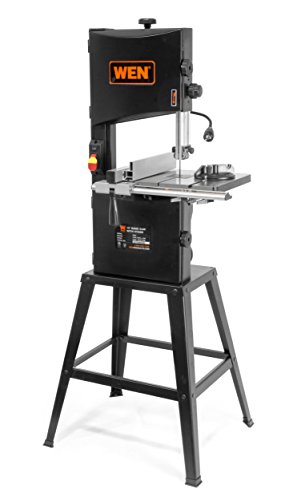
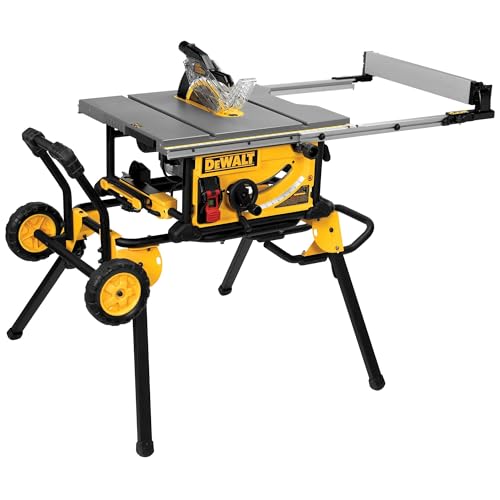
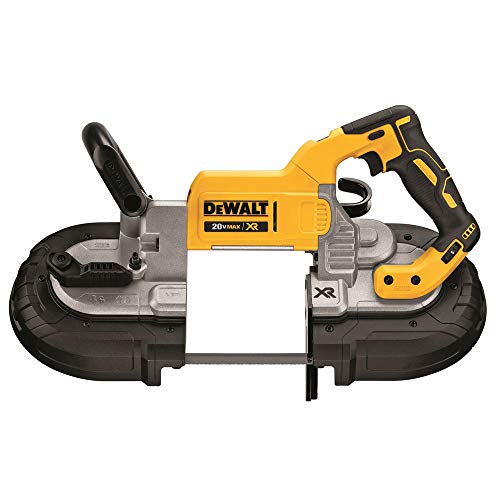
Table of Contents
- Models in this comparison
- Quick Verdict
- About Band Saws
- About Table Saws
- Head-to-Head: Blade Quality and Cut Type
- Head-to-Head: Fence Accuracy and Straight-Cut Repeatability
- Head-to-Head: Safety, Vibration, and Shop Durability
- Who Should Choose Band Saws?
- Who Should Choose Table Saws?
- Our Verdict
- Frequently Asked Questions
- Sources & References
Models in this comparison
Affiliate disclosure: if you buy through these links, we may earn a commission at no extra cost to you.
Quick Verdict
Choose Band Saws if...
- You need to cut curves, irregular shapes, or resaw thick lumber.
- You want a tool that is forgiving for beginners because the blade moves in one continuous direction.
- You plan to slice veneer, make templates, or cut wide panels where throat depth matters more than fence repeatability.
Choose Table Saws if...
- Your work is mostly straight ripping, crosscutting, and repeatable panel cuts.
- You need a fence and table surface for consistent, long straight-line accuracy.
- You want a layout that supports repeated cuts, dado work, and panel preparation with minimal repositioning.
| Factor | Band Saws | Table Saws |
|---|---|---|
| Relative Cost (source-bound only) | No source-bound cost comparison is available in the provided material. | No source-bound cost comparison is available in the provided material. |
| Best For | Curves, resawing, veneer slicing, templates, and irregular cuts. | Straight ripping, crosscutting, panel preparation, and repeatable fence-based cuts. |
| Setup Difficulty | Blade tension, tracking, and tooth direction require regular attention. | Blade height, fence parallelism, miter gauge, and guard alignment require careful setup. |
| Reliability | Depends on blade condition, tension, tracking, and throat capacity. | Depends on table flatness, fence accuracy, blade quality, and vibration control. |
| Key Advantage | Single-direction blade and flexible cutting path make it useful for curves and resawing. | Flat table and fence make it strong for repeatable straight cuts. |
| Main Drawback | Throat depth limits wide workpieces, and blade setup is more frequent. | Straight-cut focus does not replace a band saw for curves, resawing, or veneer work. |
About Band Saws
A band saw is built around a continuous blade that runs over two wheels. The blade moves in one direction at a controlled speed, and the workpiece is fed into the blade through a flat table. According to The Carpenter's Guide, this design makes kickback essentially impossible, which is a major advantage for beginners and for cuts that would feel less predictable on a circular saw. The same guide notes that a band saw can cut curves, resaw thick lumber, cut irregular shapes, and slice veneer. That makes it especially useful in furniture making, where you may need to shape a leg, cut a curved apron, resaw offcuts into thinner stock, or slice thin veneer for repair and marquetry.
The most important capacity number is throat depth, not wheel size. Throat depth is the distance from the blade to the vertical column, and it limits how wide a workpiece can be cut. The Carpenter's Guide explains that a 14-inch throat is the most common standard for mid-range band saws, and that most 14-inch band saws have throats between 13.5 and 14 inches. That same guide notes that a 14-inch throat allows cutting to the center of a 28-inch-wide panel. If you are buying for furniture work, measure your largest panels first. A saw that looks large because of wheel size may still be limited by throat depth.
For a beginner, a band saw can be a forgiving first stationary tool because the cut is guided by the blade, the table, and your feed speed. For a seasoned woodworker, the value is in the cuts a table saw cannot do as naturally: compound curves, resawing, offcuts, and thin slicing. The trade-off is that blade setup matters. A loose, poorly tracked, or incorrectly toothed blade will produce poor cuts, wander, or wear prematurely. A well-set band saw is a precision tool, but it asks for regular maintenance.
About Table Saws
A table saw is built around a circular blade that rises through a flat table. Its strength is straight-line cutting: ripping boards to width, crosscutting to length, and making repeatable panel cuts with a fence. In a furniture shop, that is where the time goes. If you are making chairs, tables, cabinets, or casegoods, you will spend a lot of time reducing rough lumber to dimension. A table saw with a good fence, a flat table, and a sharp blade can make that process faster and more consistent than hand tools alone.
The quality of a table saw is mostly about accuracy and stability. A flat table keeps the workpiece supported. A true fence keeps the cut parallel to the blade. A rigid frame and good blade support reduce vibration. For beginners, the setup is more demanding than it looks. Blade height, fence alignment, miter gauge, blade guard, and riving knife all affect safety and cut quality. A table saw is not just a blade on a table; it is a system. If the system is sloppy, the cuts will be sloppy, and the workpiece will be harder to control.
For a seasoned woodworker, a table saw is often the default tool for panel preparation. It is not the best tool for every cut, but it is very good at the cuts that happen most often. If your shop is small, the table saw may also become the center of your workflow because it can serve as a reference surface for layout, clamping, and repeatable cuts. The limitation is that a table saw does not naturally replace a band saw for curves, resawing, or veneer slicing. It is a straight-cut machine, and its value grows when your work is straight-cut work.
Head-to-Head: Blade Quality and Cut Type
Band saw blades and table saw blades are designed for different jobs. A band saw blade is a continuous loop, and its teeth are spaced for wood, metal, or plastic depending on the blade selected. According to Toolden, band saws can cut wood, metal, and plastic when equipped with the appropriate blade. That flexibility is useful in a furniture shop because you may move from softwood to hardwood, plywood, veneer, or even light metal trim without changing the whole machine. The cut quality depends heavily on blade tension, tracking, and tooth selection. A blade that is too loose will wander. A blade with the wrong tooth pitch will tear out or bog down. A blade that is not tracking properly will wear unevenly and produce a rough cut.
Table saw blades are circular and designed for straight cuts. The blade quality you need depends on the cut: ripping, crosscutting, combination, or dado. A sharp, flat, well-balanced blade gives cleaner edges and less vibration. A dull or warped blade can cause tearout, poor fence tracking, and more effort. For furniture work, the best table saw blade is not the one with the highest tooth count; it is the one that matches the cut. A ripping blade is efficient for long width cuts. A crosscut blade is cleaner for square ends. A combination blade is convenient, but a dedicated blade often gives better results when you are making repeated panel cuts.
Head-to-Head: Fence Accuracy and Straight-Cut Repeatability
Fence accuracy is the table saw's defining advantage. A good fence lets you make the same cut repeatedly with confidence. If you are ripping 20 boards to the same width, a table saw with an accurate fence is faster and more repeatable than trying to make those same cuts on a band saw. The table surface also gives you a stable reference for the workpiece. For beginners, this is important because the fence helps control the cut. For experienced woodworkers, it is important because small errors multiply across a project. A fence that is even slightly off can produce boards that are not the same width, panels that do not fit, or joints that are not square.
A band saw does not have a fence in the same way a table saw does. It has a table, a blade, and often a guide assembly, but the primary control is your feed path. That makes it less suited to long, repeatable straight ripping. It can make straight cuts, but it is not the tool you reach for when you need 30 identical straight cuts. Where the band saw wins is flexibility. It can follow a curve, cut a compound angle, resaw a thick board, or cut a shape that would be difficult or unsafe on a table saw. If your work is mostly straight lines, the table saw's fence is the more important feature. If your work includes curves and resawing, the band saw's flexibility is the more important feature.
Head-to-Head: Safety, Vibration, and Shop Durability
Safety is one of the clearest differences. According to The Carpenter's Guide, a band saw is one of the safest large power tools to own because its single-direction continuous blade makes kickback essentially impossible. That does not mean a band saw is risk-free. The blade is still sharp, the workpiece can still be pinched, and poor setup can still cause bad cuts. But the machine does not behave like a circular saw that can grab a workpiece and throw it back. For a beginner, that lower level of unpredictability is a real advantage. A band saw can be a good first stationary saw because it teaches feed control without the same level of fear.
A table saw has a different safety profile. The circular blade can be dangerous if the workpiece is not controlled, if the fence is inaccurate, or if the blade guard and riving knife are not used correctly. Vibration also matters. A table saw that vibrates under load is harder to control and can produce poorer cuts. A rigid table, a well-mounted blade, and a stable fence reduce vibration and improve accuracy. In a real shop, durability comes from how well the machine holds alignment. A band saw that has lost blade tracking will cut poorly. A table saw that has lost fence accuracy will cut poorly. Both tools require maintenance, but the table saw's accuracy is more dependent on the relationship between the table, fence, blade, and workpiece.
Who Should Choose Band Saws?
Choose a band saw if your work includes curves, resawing, veneer slicing, templates, or irregular cuts. It is a strong choice for beginners who want a safer first stationary tool, and it is a strong choice for serious hobbyists adding a second or third stationary tool. According to The Carpenter's Guide, a band saw is especially valuable for serious hobbyists who want to cut curves, resaw lumber, make templates, and slice veneer. If you are making furniture with shaped components, curved legs, shaped aprons, or custom inlays, the band saw will save time and reduce frustration. It is also a good choice if you want to resaw offcuts into thinner stock for small parts, veneer, or repair work.
Who Should Choose Table Saws?
Choose a table saw if your work is mostly straight ripping, crosscutting, and panel preparation. It is the better first saw if you are building casegoods, tables, chairs, or cabinets and you need to reduce rough lumber to dimension quickly. If you value repeatable fence cuts, a flat reference surface, and a layout that supports repeated straight-line work, the table saw is the more practical choice. It is also the better choice if you want a machine that can serve as the center of your shop for panel work. The table saw is not the right tool for every cut, but it is the right tool for the cuts that happen most often in furniture making.
Our Verdict
Buy the table saw first if your work is mostly straight. For most furniture makers, the table saw is the higher-utility first stationary tool because it handles the repetitive cuts that define the work: ripping, crosscutting, panel sizing, and repeatable fence cuts. Buy the band saw first if your work is mostly curves, resawing, veneer, or irregular shapes. If you can only afford one tool and you are making furniture, the table saw is usually the safer bet for daily shop value. If you are adding a second tool, or if your project list is full of curved and resawn work, the band saw is the more useful addition. The honest answer is not that one is better than the other. The honest answer is that they solve different problems, and the best buy is the one that matches the cuts you actually make.
Frequently Asked Questions
Is a band saw safer than a table saw?
A band saw is generally more forgiving for beginners because the blade moves in one continuous direction. According to The Carpenter's Guide, that design makes kickback essentially impossible. A table saw can still be safe when set up and used correctly, but it requires more attention to fence alignment, blade guarding, and workpiece control.
Can a band saw replace a table saw?
No. A band saw can make straight cuts, but it is not as efficient or as repeatable as a table saw for long ripping and crosscutting. It is better for curves, resawing, veneer slicing, and irregular cuts. If your work is mostly straight panel cutting, a table saw is the more practical tool.
Can a table saw replace a band saw?
Not for the work a band saw does best. A table saw is not ideal for curves, resawing thick lumber, slicing veneer, or cutting irregular shapes. It is a straight-cut machine. If you need those cuts often, a band saw is the better tool.
What should I look for in a band saw?
Look at throat depth, resaw capacity, blade speed options, and blade compatibility. According to The Carpenter's Guide, buyers should focus on throat depth and resaw capacity rather than relying only on wheel size. Throat depth determines how wide a workpiece can be cut, and it is the practical limit for many furniture projects.
Which is better for a beginner furniture maker?
If you are making mostly straight furniture, start with a table saw and learn to set it up carefully. If your projects include curves, shaped parts, resawing, or veneer, a band saw may be the better first stationary tool because it is more forgiving and handles those cuts naturally. The best choice is the one that matches the work you plan to do most.


