

How To Choose The Right Band Saws 2026
By Bill Hartley
In the hierarchy of shop machinery, the band saw is often the most misunderstood tool. Unlike the table saw, which demands absolute precision for joinery, or the router table, which requires rigid stability for profiling, the band saw is a versatile workhorse that handles everything from resawing thick stock to cutting intricate curves. However, its reputation for wandering blades and poor tracking often stems from a lack of understanding regarding its mechanical nuances. Choosing the right machine isn't about finding the one with the most horsepower; it’s about selecting a tool that maintains tension, minimizes vibration, and keeps the blade true under load. As a furniture maker, I rely on my band saw for breaking down rough lumber and cutting compound curves, and I know that a poorly chosen saw will cost you more in frustration and wasted wood than the initial savings.
Quick Answer
To choose the right band saw, prioritize a cast-iron table with precise T-track slots, a motor with sufficient horsepower (1.5HP minimum for 14-inch models) to maintain blade speed under load, and a machine with a robust frame to minimize vibration. Ensure the tool complies with OSHA machine guarding standards for safety, and verify that the blade guides are adjustable for both thrust bearings and side supports to maintain tight tolerances during resawing or intricate cuts.
Table of Contents
Our Top Picks
Affiliate disclosure: if you buy through these links, we may earn a commission at no extra cost to you.
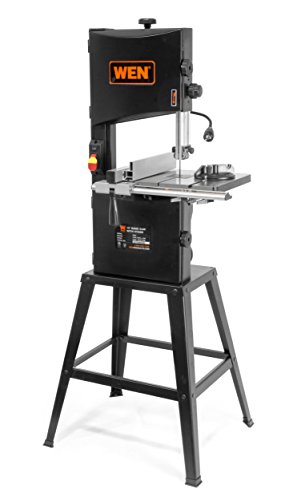
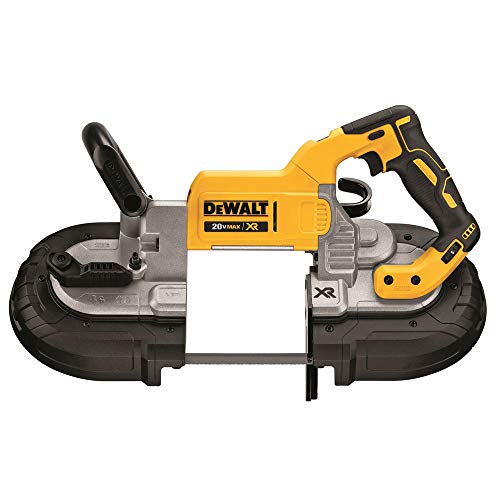

Frame Construction and Vibration Control
The single most important factor in band saw performance is the rigidity of the frame. A lightweight, stamped-steel frame may look like a band saw, but it will behave like a toy when you attempt to resaw hardwood. When the blade engages the wood, it exerts significant lateral force. A flimsy frame will absorb this energy by vibrating, causing the blade to wander, resulting in wavy cuts and premature blade fatigue. Look for cast-iron or heavy-gauge steel frames that are ribbed for internal support. The upper and lower wheels should be solid cast iron, not aluminum, to provide the necessary mass to dampen vibration and maintain consistent blade speed.
As a teacher, I often see students frustrated by "chatter" marks on their resawn surfaces. This is rarely a blade issue; it is almost always a frame resonance issue. A well-built band saw will feel solid and deadened when you tap the frame. The wheels should spin with a smooth, heavy inertia, not a whirring, loose sensation. If you are buying a 17-inch or larger model, the base must be substantial enough to anchor the machine to the floor or a heavy stand. Vibration is the enemy of precision, and in band sawing, precision is everything.
Motor Power and Drive Systems
Horsepower matters, but only in the context of your intended use. For a 14-inch band saw, a 1/3 HP motor is sufficient for cutting curves in softwoods, but it will bog down significantly when cutting hardwoods or resawing. For serious furniture work, aim for at least 1/2 HP to 1 HP. For 17-inch and 20-inch models, 1.5 HP to 3 HP is the standard for professional resawing. More importantly, look for a motor with a variable speed drive. Different blade widths and wood densities require different surface feet per minute (SFPM) for optimal cutting. A variable speed controller allows you to slow down for thin blades cutting metal or hard exotic woods, and speed up for thick blades in soft lumber.
Consider the drive system as well. Direct-drive motors are simpler and require less maintenance, but belt-drive systems offer better torque multiplication and protect the motor from sudden jams. If you are resawing thick oak, the belt drive will handle the load more smoothly. Also, ensure the motor pulleys are accessible for adjustment without needing to disconnect the power or move the entire motor assembly. A well-designed shop has a band saw that can be tuned quickly between different tasks, from delicate inlay work to heavy-duty log breakdown simulation.
Table Precision and T-Track Integration
The table is your reference surface, and it must be flat and stable. Cast-iron tables are superior to aluminum or steel because they are heavier and more resistant to denting. The table should have a smooth, machined surface that allows the blade to pass through with minimal friction. Look for a table with integrated T-tracks or miter slots that are precisely aligned with the blade. If the miter slot is not parallel to the blade, your cuts will be inaccurate, and you won't be able to use standard jigs or fences effectively.
Adjustability is key. The table should tilt easily and lock securely at various angles, typically up to 45 degrees. The locking mechanism should be robust, with no play or wobble once tightened. Additionally, the table height adjustment should be smooth and hold position without creeping down under the weight of the workpiece. A good band saw table will have a quick-release lever or a sturdy handwheel that allows for micro-adjustments. For those who use sleds or jigs, a table with multiple T-track slots is essential for securing complex workpieces.
Blade Guidance and Tracking Mechanisms
The heart of a band saw's performance lies in its blade guidance system. You need two types of support: thrust bearings (or a thrust block) behind the blade to prevent it from being pushed backward, and side bearings (or guides) to the left and right of the blade to prevent lateral deflection. High-quality band saws use ceramic or carbide-tipped thrust bearings that are smooth and durable. Side guides should be adjustable and easy to access. The tracking mechanism, which keeps the blade centered on the wheels, should be precise and allow for fine adjustments. A poorly adjusted tracking mechanism will cause the blade to jump off the wheels, which is dangerous and destructive.
Consider the ease of changing blades. A tool-free blade change system is a significant time-saver in a busy shop. Look for quick-release tension levers and easy-access guide adjustments. If you plan on using a variety of blade widths, ensure that the guide posts are long enough to accommodate the thickest blades you intend to use. The guides should also be positioned close to the blade to minimize deflection, but not so close that they interfere with the cut. Properly adjusted guides are the difference between a clean, straight cut and a ruined piece of lumber.
Safety Compliance and Machine Guarding
Safety is paramount when operating any woodworking machinery, and band saws are no exception. OSHA provides specific eTools for machine guarding requirements applicable to band saws, particularly in sawmill and industrial settings. While home shop regulations may be less stringent, adhering to these standards ensures a safer working environment. Key safety features include a blade guard that covers the upper portion of the blade, a riving knife or spreader to prevent kickback, and a quick-stop mechanism. The blade guard should be adjustable to follow the thickness of the workpiece, minimizing exposure to the spinning blade.
Employers and serious hobbyists must utilize OSHA's compliance assistance resources to ensure their band saw operations meet federal safety regulations. This includes regular inspection of the machine for wear and tear, ensuring that all guards are in place and functional, and training operators on proper use. Fatality reports maintained by OSHA for machinery-related incidents highlight the importance of proper guarding. A band saw with a well-designed guard system protects the operator from accidental contact with the blade and contains wood chips and debris. Always prioritize a machine that has been designed with safety as a core component, not an afterthought.
Frequently Asked Questions
What is the minimum horsepower needed for resawing?
For a 14-inch band saw, 1/2 HP is the minimum for occasional resawing, but 1 HP is recommended for regular use. For 17-inch and larger models, 1.5 HP to 3 HP is ideal for resawing thick hardwoods.
How do I prevent the blade from wandering during cuts?
Ensure your blade guides are properly adjusted, the blade is sharp and correctly tensioned, and the table is parallel to the blade. Also, use a fence or sled to support the workpiece and maintain a steady feed rate.
Can I use a band saw to cut metal?
Yes, but you must use a bi-metal or carbide-tipped blade designed for metal cutting, and reduce the speed using the variable speed drive. Always wear appropriate safety gear, including eye protection and gloves.
What is the difference between a 14-inch and a 17-inch band saw?
The primary difference is the resaw capacity. A 14-inch band saw typically has a 6-inch resaw height, while a 17-inch model offers 12 inches or more. The 17-inch model also has a larger table and more stable frame for heavier cuts.
How often should I replace the blade guides?
Thrust bearings and side guides should be inspected regularly for wear. If they are chipped, cracked, or no longer spin smoothly, they should be replaced. Ceramic guides last longer than steel but are more brittle.
Choosing the right band saw is an investment in your shop's versatility and your own safety. By focusing on frame rigidity, motor power, table precision, and safety compliance, you can select a tool that will serve you well for years to come. Start by assessing your most common tasks, whether it's resawing lumber for veneers or cutting intricate curves for furniture components. Then, visit your local dealer or inspect the machine in person to verify its build quality and safety features. A well-chosen band saw will become the backbone of your woodworking projects, delivering the precision and reliability you need to create high-quality furniture.


