

How To Choose The Right Table Saws For Cabinet
By Bill Hartley
In a cabinet shop, the table saw is not merely a cutting tool; it is the primary reference point for every dimension in your build. When you are fitting dovetails that must hold tight without glue or cutting joinery for a high-gloss lacquer finish, the margin for error vanishes. Choosing the wrong machine doesn't just result in wasted wood—it results in wasted time and compromised structural integrity. This guide focuses on the mechanical realities of selecting a saw that will maintain its geometry over decades of use.
Quick Answer
For serious cabinet shop use, prioritize a heavy cast-iron contractor or hybrid saw (minimum 3HP) with a precision-ground fence system and zero-clearance insert compatibility over lightweight portable models. The critical factors are table flatness (within .005 inches), fence parallelism to the blade throughout its travel, and the rigidity of the trunnion assembly to dampen vibration during heavy cuts.
Table of Contents
Our Top Picks
Affiliate disclosure: if you buy through these links, we may earn a commission at no extra cost to you.

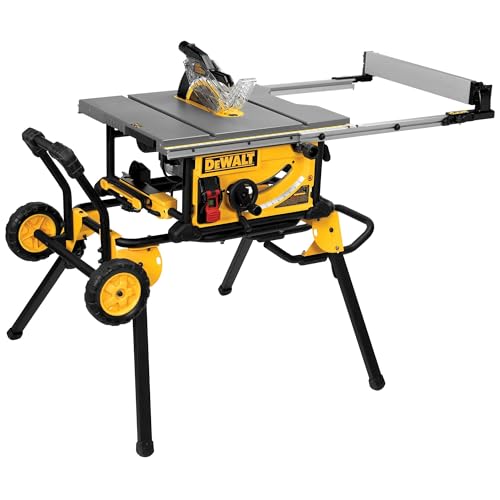
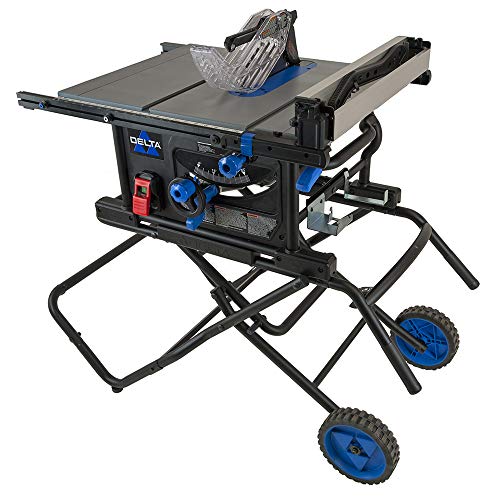
The Foundation: Table Flatness and Mass
The first thing you must inspect is the table surface. In cabinet work, we rely on the saw table to support the workpiece until the very last millimeter of the cut. If your table has a "belly" or dips even slightly in the center, your workpiece will rock when crossing the blade. This rocking causes tear-out on the exit side of the cut and introduces dimensional errors that compound as you build up a cabinet carcass.
Look for cast-iron tables. While steel tops are common on contractor saws, they flex under load and vibrate more aggressively. A heavy cast-iron table provides thermal mass and damping. When inspecting a used or new saw, place a reliable straightedge across the table. You should not be able to slide a piece of paper between the straightedge and the table surface anywhere along its length. If the saw has an extension wing, it must sit perfectly flush with the main table, both vertically and horizontally.
Fence Geometry and Locking Mechanisms
A fence is only as good as its ability to stay parallel to the blade. In fine furniture making, we often rip boards to exact widths for panel glue-ups. If your fence is not perfectly parallel to the blade, you will bind the wood against the fence, causing kickback or burning the wood. More subtly, if the fence twists under clamping pressure, your cut will be out of square.
Avoid fences that rely on a single locking point at the front. A high-quality cabinet shop fence must lock securely at both the front and rear simultaneously to prevent twisting. Look for micro-adjustment capabilities. While you can set a fence with a tape measure, the ability to make thousandths-of-an-inch adjustments ensures your joints fit perfectly without test-fitting every single piece.
For seasoned woodworkers, consider aftermarket fence systems like Biesemeyer or Kreg if the stock fence is inadequate. However, for beginners, a factory fence with a robust T-track system and solid locking handles is often sufficient to start, provided you check its parallelism regularly.
Trunnion Rigidity and Vibration Control
The trunnions are the internal heart of the saw, holding the arbor and motor. They determine how smoothly the blade spins and how much vibration is transmitted to the table. In a cabinet shop, we make long rip cuts that require steady feed rates. If the trunnions are made of stamped steel (common in entry-level portable saws), they will flex under load, causing the blade to wander and the cut to be wavy.
You need cast-iron or heavy-gauge aluminum trunnions. These provide the mass necessary to keep the blade speed constant when cutting dense hardwoods like maple or walnut. Listen to the saw when it is running idle. It should hum, not rattle. If you hear a grinding noise or feel excessive vibration through the table, the bearings are likely worn or the alignment is off. A rigid trunnion assembly also ensures that your blade height and angle adjustments remain stable over time.
Arbor Quality and Runout Tolerance
Runout refers to the wobble of the arbor relative to its center point. Even with a high-quality blade, if the arbor has excessive runout, your cut will be rough and your blade life will be shortened. For cabinet work, we demand precision. A runout of less than 0.002 inches is acceptable for professional results.
Inspect the arbor threads and the flange. They should be clean and free of rust or burrs. When installing a blade, ensure the arbor is square to the table. Many cabinet saws allow for arbor tilting (beveling). Check that the bevel scale is accurate. You can verify this by placing a combination square against the blade while it is tilted to 45 degrees; the blade should read exactly 45 degrees. If not, the scale needs calibration.
Motor Power and Dust Collection Integration
In a cabinet shop, we cut dense hardwoods that require significant torque to maintain blade speed. A 1.5HP motor will bog down on a 3/4-inch maple rip, leading to burned wood and potential kickback. For serious work, aim for at least 3HP. If you are limited by electrical service


